The Art We Carry
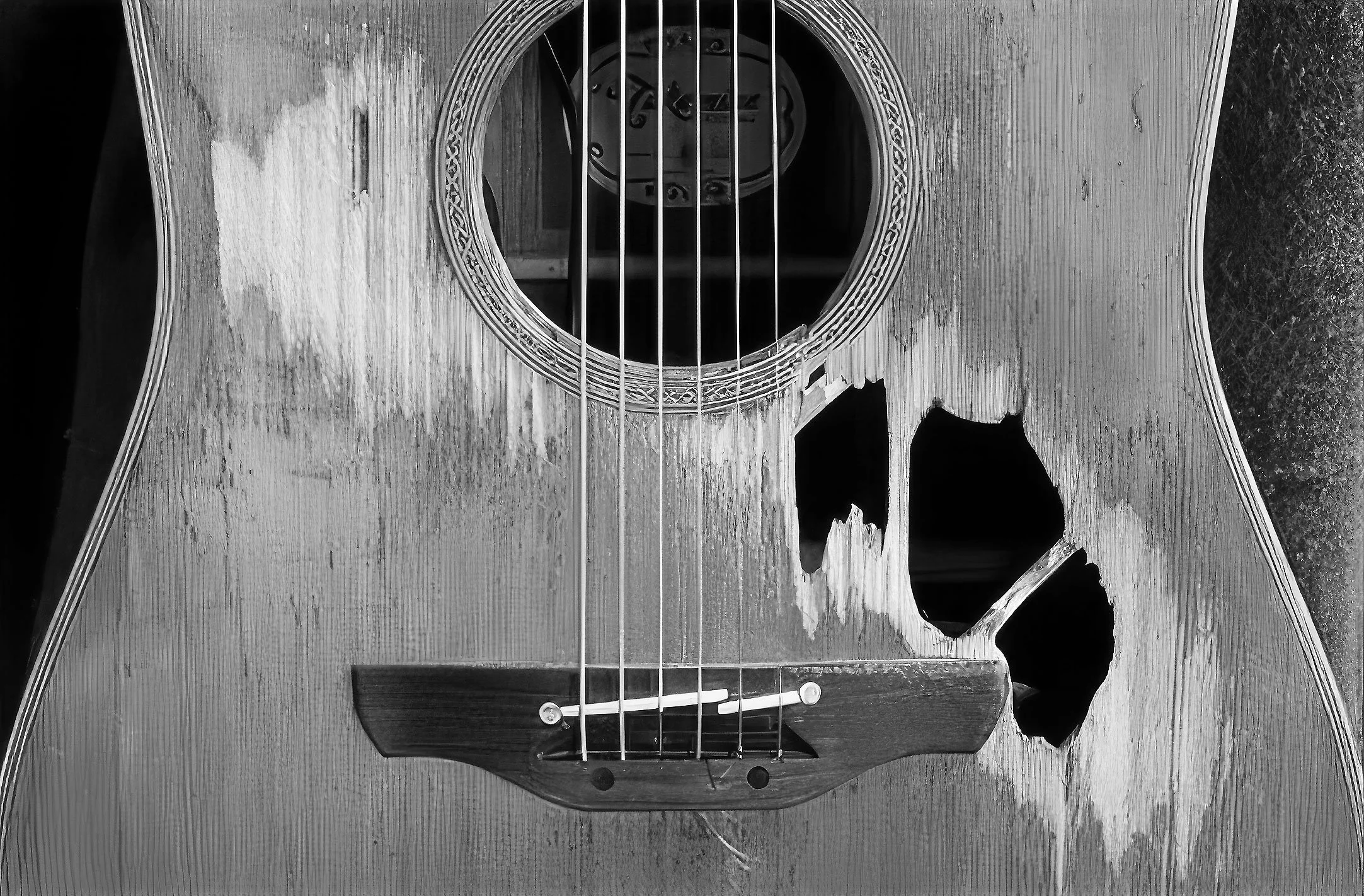
Glen Hansard's guitar.
There is something extraordinary about art.
It is one of the few things we create that has the ability to outlive us. Long after our voices have quieted, our homes have changed hands, and our names slowly fade from memory, our art remains. A painting hangs on a wall. A book is pulled from a shelf. A film is projected in a dark theater. A song finds its way into someone's life at exactly the moment they need it.
Art survives. Perhaps that's why we cling to it.
The greatest artists don't simply entertain us - they reveal themselves to us. Every song, every painting, every poem, every photograph, every film is an act of vulnerability. Whether we realize it or not, artists spend their lives translating the human experience into something the rest of us can feel. They make loneliness visible. They give language to grief. They create hope where there wasn't any before. In many ways, art is simply love made tangible.
This week, Glen Hansard passed away. Like so many others, I found myself sitting quietly with the news. I watched old performances. I read tributes. I listened to songs I hadn't heard in years. And somewhere in the middle of all of that, I found myself crying. It struck me as interesting and even gave me a sense of being an imposter. Not because I loved Glen's music - that part made perfect sense - but because we often feel almost apologetic when we mourn artists we've never met.
It's a strange part of modern life. When someone famous dies, people inevitably ask, "Why does everyone care so much? You didn't even know them." But maybe we've misunderstood what it means to know someone.
I've never met Glen Hansard. We never shared a meal or a conversation. I've never shaken his hand. But I have spent hours with his music - days of my life, even. His albums have been on repeat through my speakers, and his lyrics are committed to memory. I've watched him perform with a kind of honesty that leaves nowhere to hide. I've witnessed pieces of his soul because he willingly placed them into songs and offered them to complete strangers - myself included.
If art is an expression of who we are, then perhaps we knew him exactly as he intended to be known.
I'll never forget the first time I watched Once. It changed my understanding of filmmaking forever. The film opens with Glen standing alone on a Dublin street, busking with a beaten guitar worn from years of playing. The camera is handheld and begins at a distance in a wide shot while he sings softly.
"Scratching at the surface now / trying hard to work it out / and if you have something to say / say it to me now."
Then Glen's voice erupts. He belts out the chorus as the camera pushes in - not polished, not perfect, but raw. There is pain in it. Longing. Hope. Regret. Every emotion exists at once. There is no performance. There is truth. Humanity.
Every time I watch that scene, I feel the same thing. Chills spread across my entire body because, for a few brief moments, the distance between artist and audience disappears. I don't just hear a song. I encounter another human being.
This is the miracle of great art: it allows us to witness another soul.
As filmmakers, musicians, writers, painters, dancers - we spend countless hours learning technique. We obsess over composition, structure, lighting, color, rhythm, timing, and craft. Those things matter, but they are never the reason a piece of art stays with us. The work that changes us is almost always the work that required someone to tell the truth. Not perfectly - just honestly.
I've often wondered why certain artists affect us more deeply than others. Perhaps it's because they give us permission to feel the things we've been trying to hide. To grieve. To love. To hope. To rage. To forgive. To simply be human.
One of my favorite moments featuring Glen Hansard comes from Bono & The Edge: A Sort of Homecoming, when he recites Moya Cannon's poem Carrying the Songs. He reflects on the idea that songs continue long after artists are gone - that they become what we carry when we have nothing else of value. He closes with a paraphrase of Frank Harte's famous quote: "Those who are victors write the history. Those who suffered wrote the songs."
I've thought often about that poem and Harte's original words. History tells us what happened - art tells us what it felt like. History remembers facts. Art remembers humanity. Perhaps that is why artists leave such an imprint on our lives. They become historians of the heart. They preserve emotions that would otherwise disappear with us.
When they die, we don't lose the songs. We lose the person who could have written the next one.
Maybe that's why grief for an artist feels so complicated. We aren't mourning celebrity. We're mourning possibility. We're mourning a voice that helped us make sense of ourselves. We're mourning the realization that there will never again be a new song written by that particular soul.
Yet there is something profoundly hopeful hidden inside that sadness. Art doesn't end when the artist does. It changes hands. It moves us to create - to build something new.
Every time we recommend a favorite film, play an old record for a friend, quote a line from a novel, or revisit a scene that once changed us, we carry that artist forward. Their work continues to breathe through us.
Perhaps that's all any artist ever hopes for. Not immortality. Remembrance. Connection. To know that somewhere, someday, another human being might feel a little less alone because they created something honest enough to survive them.
Maybe that is the true gift of art. It reminds us that while every life is temporary, love, beauty, and truth have an extraordinary way of refusing to die.
And so we carry the songs.
We carry the stories.
We carry the films.
We carry the art.
And in doing so, we carry a small piece of the people who created them.
Maybe that's how they stay with us.
Maybe that's how they always will.
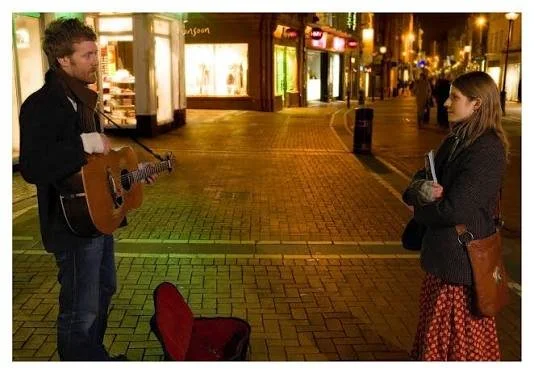
Glen Hansard and Markéta Irglová in Once.
Carrying the Songs
By Moya Cannon
Those in power write the history, those who suffer write the songs
- Frank Harte
It was always those with little else to carry
who carried the songs
to Babylon,
to the Mississippi –
some of these last possessed less than nothing
did not own their own bodies
yet, three centuries later,
deep rhythms from Africa,
stowed in their hearts, their bones,
carry the world’s songs.
For those who left my county,
girls from Downings and the Rosses
who followed herring boats north to Shetland
gutting the sea’s silver as they went
or boys from Ranafast and Horn Head
who took the Derry boat,
who slept over a rope in a bothy,
songs were their souls’ currency
the pure metal of their hearts,